406–418 W 20th St · W 20th St, 9th–10th Ave
Cushman Row
Latest from the feed2 weeks ago
See allPermit. Permit filed to restore the stoop ironwork at No. 410.
NYC Buildings Department
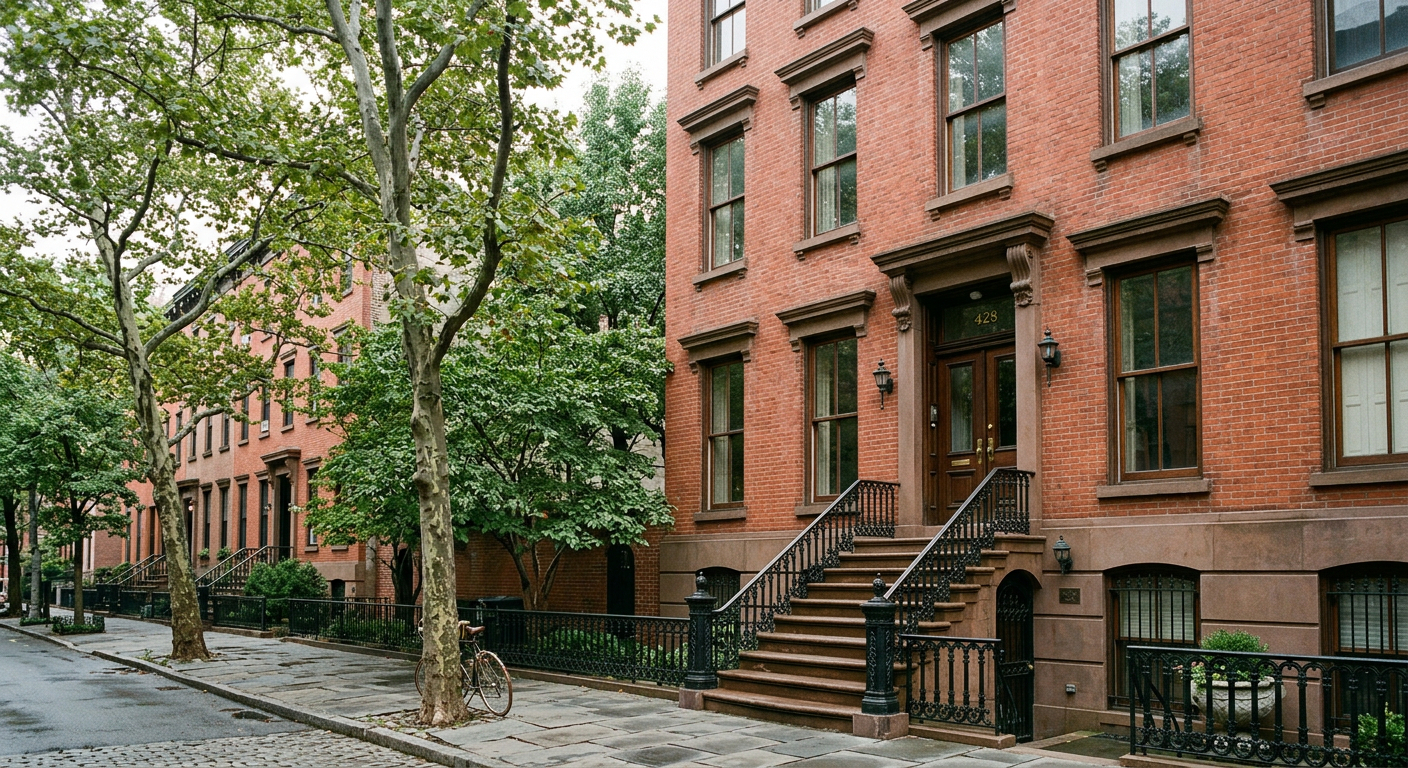
Seven Greek Revival rowhouses built in 1839–1840 by Don Alonzo Cushman, a dry-goods merchant who helped turn Clement Clarke Moore’s Chelsea estate into a neighborhood. They face the General Theological Seminary and are among the best-preserved houses of their age in the city.
- Architect
- Unknown
- No architect is on record. If you know who designed it, suggest an edit.
- Style
- Greek Revival
- Flat, wide doorways, plain cornices and iron railings borrowed from ancient temples. The fashionable look for New York houses in the 1830s and 40s.
- Built
- 1839–1840
- 186yrsAge3Stories
- Built when Chelsea was still at the edge of the city, soon after Moore began selling his estate off in lots.
- Use
- Private homes
- Built as single-family houses. Most are still homes today, a few divided into apartments.
Good to know
- Protected
- Chelsea Historic District · 1970
- The row is protected as part of the district, so facade changes need Landmarks Preservation Commission approval.
- Access
- Private homes
- Best seen from the sidewalk on the Seminary side of the street.
Architectural details
What to look for, and what it tells you about when, how and for whom this building was made.
- Laurel-wreath attic windowsSmall attic windows framed by cast-iron wreaths. The detail that makes the row easy to recognize.
- Pineapple newel postsCast-iron pineapples top the stoop railings, a common 19th-century sign of welcome.
- Greek Revival doorwaysDeep entrances framed by flat pilasters and a heavy stone lintel.
Nearby
 You are here
Cushman Row
406–418 W 20th St · 1840
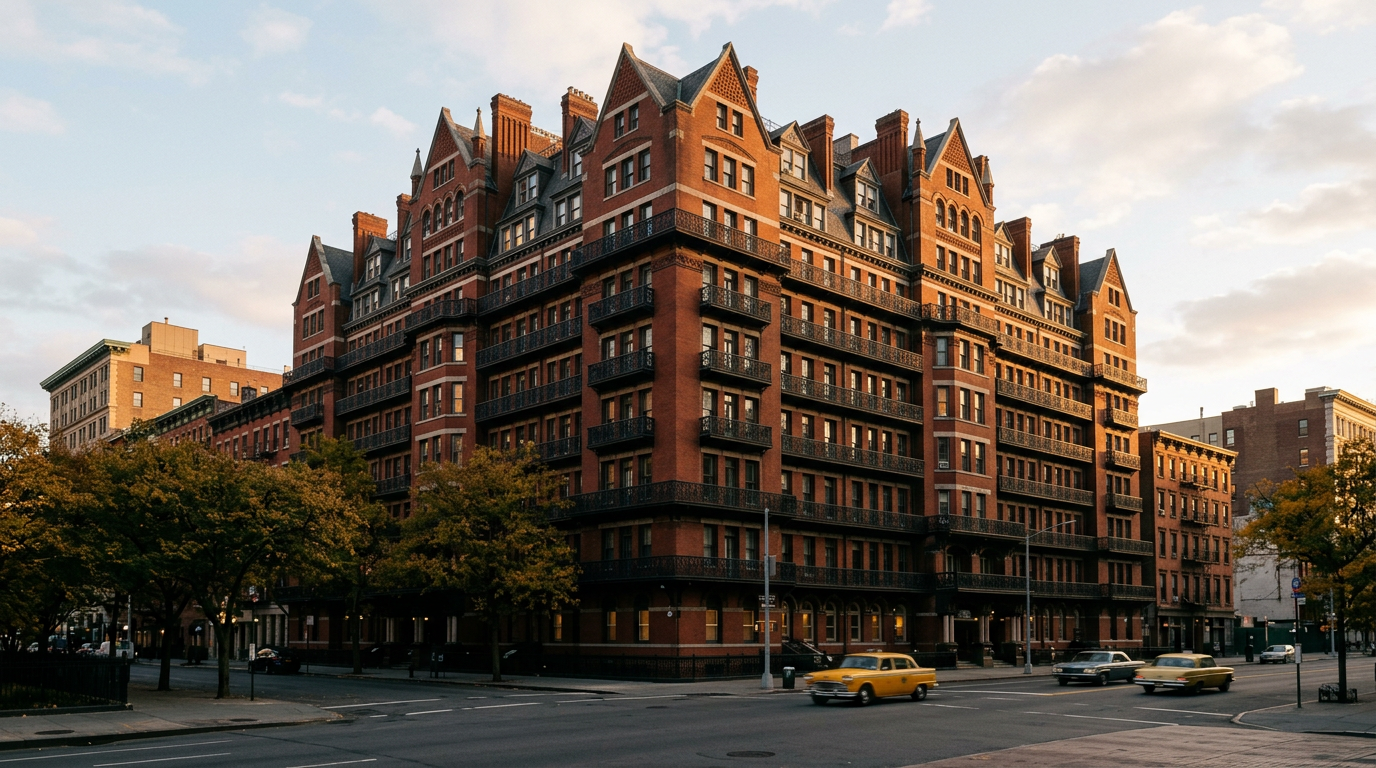
Hotel Chelsea
222 W 23rd St · 1884
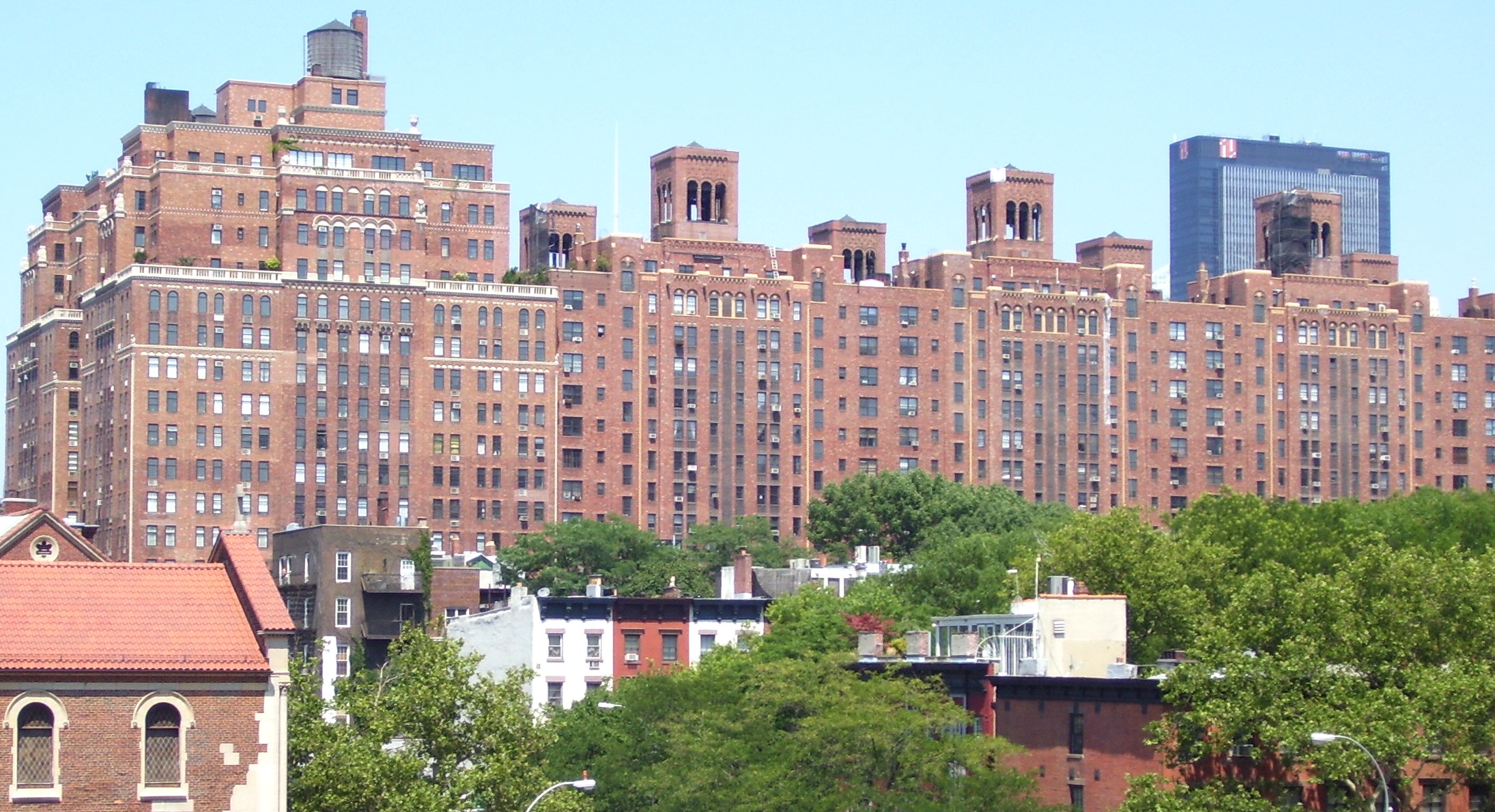
London Terrace
405 W 23rd St · 1930
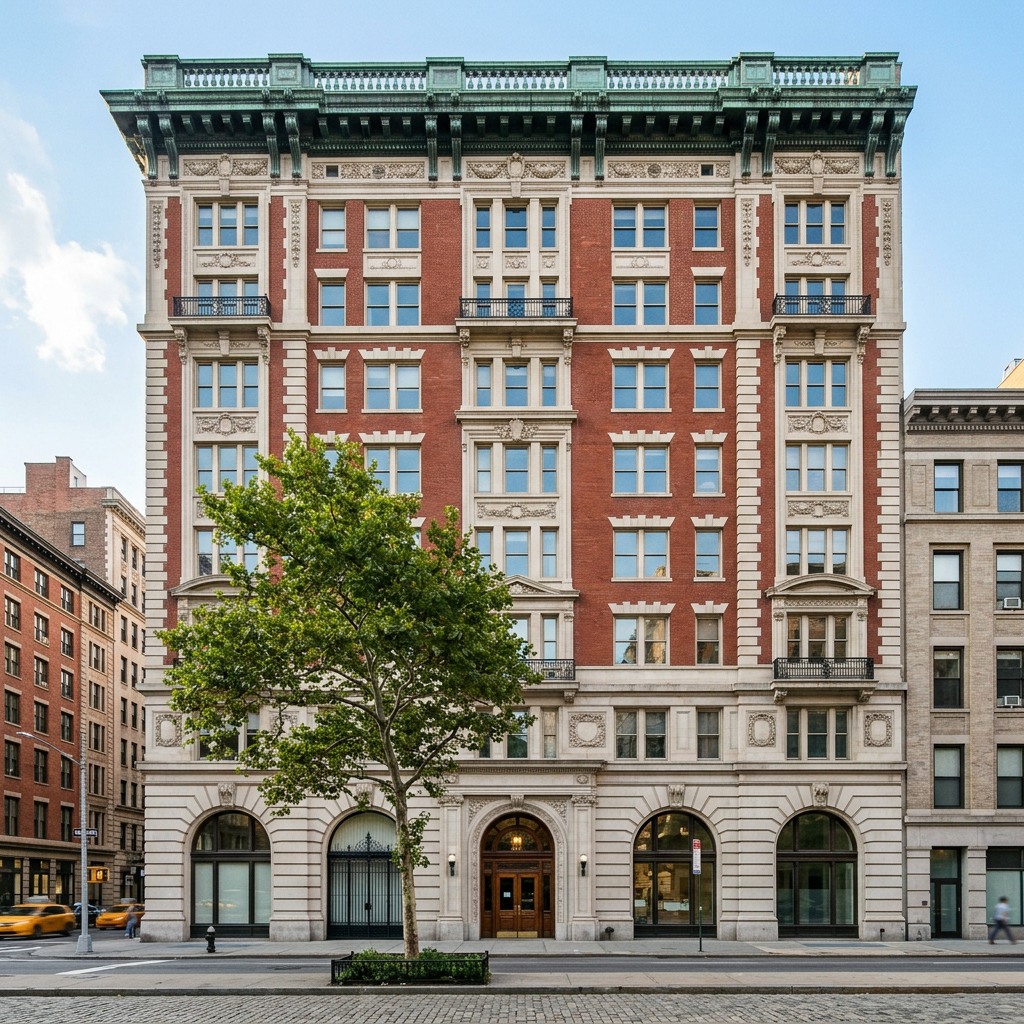
McBurney YMCA
215 W 23rd St · 1904